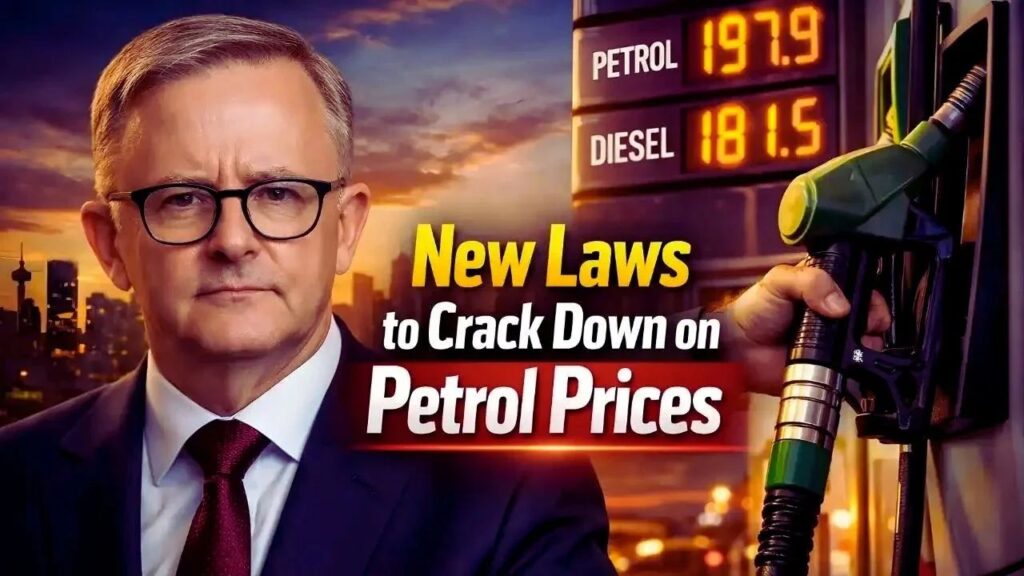
Motorists across Australia are seeing major changes in how petrol pricing is regulated in 2026. In response to rising fuel costs and concerns about unfair pricing practices, the federal government has introduced a sweeping set of reforms designed to strengthen oversight, increase transparency, and deliver financial relief to households.
These new rules represent one of the most significant shifts in fuel market regulation in recent decades. While global oil prices remain outside domestic control, the new framework focuses on ensuring that local fuel retailers operate fairly and pass on savings to consumers when available.
Why Australia Introduced New Petrol Price Laws in 2026

Fuel prices have been volatile in recent years, driven by international supply disruptions, shifting exchange rates, and growing demand across global markets. These fluctuations placed pressure on Australian households, particularly those relying on daily commuting or long-distance travel.
Addressing Price Volatility and Consumer Concerns
During periods of rapid price increases, many drivers expressed frustration over sudden spikes at service stations. Concerns grew that some retailers were raising prices faster than necessary or failing to pass on cost reductions promptly.
In response, regulators began reviewing pricing behavior more closely. The strengthened laws aim to ensure that fuel retailers maintain transparent pricing and avoid practices that mislead consumers.

Organizations such as the Australian Competition and Consumer Commission now have expanded responsibilities to oversee pricing conduct across the country.
Tougher Penalties for Unfair Pricing Practices
One of the most impactful features of the 2026 reforms is the introduction of significantly higher penalties for companies that violate competition laws.
Increased Financial Consequences for Misconduct
Under the updated legislation, companies found guilty of anti-competitive conduct or misleading pricing face dramatically larger fines than in previous years.

Key enforcement changes include:
- Maximum penalties rising to up to $100 million per violation
- Additional penalties tied to company turnover levels
- Greater legal authority to investigate coordinated pricing behavior
- Faster enforcement processes for smaller violations
These measures are designed to discourage price manipulation and create a strong financial deterrent against unethical practices.
Stronger Monitoring and Investigations
Regulators now have greater flexibility to investigate suspected misconduct quickly. This includes enhanced data monitoring tools that track pricing patterns across regions.
The goal is to detect unusual price movements early and intervene when necessary to protect consumers.
Temporary Fuel Excise Reduction to Ease Costs
Alongside stricter enforcement measures, the government introduced a temporary reduction in fuel excise to provide direct financial relief.
How the Fuel Excise Cut Works
Fuel excise is a tax included in the retail price of petrol and diesel. Reducing this tax lowers the overall cost paid by drivers.
Key details of the excise reduction include:
- Excise reduced by approximately 26 cents per litre
- Applies to both petrol and diesel
- Designed as short-term financial support
- Scheduled to remain in place for three months
For households that rely heavily on vehicles, this reduction offers immediate cost relief at the pump.
When Drivers May Notice Lower Prices
Although the tax reduction begins immediately, price changes at fuel stations may take several days to appear.
This delay occurs because:
- Existing fuel stocks were purchased at higher prices
- Retail supply cycles vary across regions
- Competition influences how quickly prices adjust
Monitoring local station pricing remains the best way to identify savings opportunities.
Enhanced Transparency Rules for Fuel Retailers
Transparency has become a central focus of the 2026 reforms. New reporting requirements aim to make pricing clearer and more predictable for consumers.
Daily Price Reporting Requirements
Under updated rules, fuel retailers in certain regions must report their maximum daily price to centralized systems.
Key benefits include:
- Reduced risk of sudden price spikes
- Greater confidence when planning fuel purchases
- Improved consumer awareness of pricing trends
Retailers are typically allowed to lower prices during the day but are restricted from increasing them once reported.
Consumer Access to Real-Time Information
Digital platforms now provide more reliable pricing information, allowing motorists to compare fuel costs across nearby stations.
These tools empower drivers to make informed decisions and avoid paying unnecessarily high prices.
Strengthening Fuel Supply Security in Regional Areas
Regional communities have historically faced higher fuel costs due to distance and limited competition. The new framework includes measures to improve supply reliability in these areas.
Supporting Rural and Remote Communities
Improved logistics coordination allows fuel suppliers to share transport resources during periods of supply stress.
Benefits include:
- Reduced risk of fuel shortages
- More stable pricing in remote locations
- Improved delivery efficiency
These measures are closely monitored to ensure that cooperation between suppliers supports availability without encouraging price coordination.
Preventing Supply Disruptions
Strategic fuel reserves and supply flexibility policies provide additional safeguards against localized shortages.
These measures help stabilize availability during periods of global disruption.
Impact on Businesses and Transport Industries
Fuel costs directly influence business operations, particularly in industries that depend on transportation.
Managing Costs for Freight and Logistics
Freight companies rely heavily on diesel, making price stability critical to maintaining affordable shipping costs.
Government measures such as temporary charge freezes aim to:
- Reduce pressure on transport operators
- Stabilize supply chains
- Limit price increases for consumer goods
Maintaining stable transport costs supports broader economic resilience.
Supporting Commercial Fleets
Businesses operating large vehicle fleets benefit from improved pricing transparency and regulatory oversight.
Clear pricing trends allow organizations to:
- Forecast operational costs more accurately
- Adjust logistics strategies
- Plan fuel purchases more efficiently
These changes improve long-term financial planning across multiple industries.
What Drivers Should Expect in the Months Ahead
While domestic reforms improve transparency and fairness, global market forces continue to influence overall fuel prices.
Continued Market Fluctuations
Fuel prices may still rise or fall depending on:
- International oil production levels
- Global shipping conditions
- Currency exchange rates
Drivers should remain prepared for ongoing changes rather than expecting permanent price reductions.
Potential Future Policy Adjustments
Governments may extend or adjust relief measures depending on economic conditions.
Possible future initiatives include:
- Extended fuel tax relief
- Additional transparency requirements
- Expanded consumer protection programs
Remaining informed about policy updates helps drivers plan more effectively.
Practical Tips for Navigating the New Fuel Pricing Environment
Adapting to changing fuel regulations requires both awareness and smart habits.
Use Reliable Pricing Tools
Digital fuel comparison platforms help drivers identify cost-effective stations quickly.
Regular monitoring allows motorists to:
- Avoid high-priced locations
- Refuel at competitive stations
- Reduce weekly fuel spending
Even small savings per litre can add up over time.
Plan Refueling Strategically
Fuel prices often follow predictable patterns. Refueling during lower-price periods improves value.
Additional smart practices include:
- Keeping vehicles well maintained
- Avoiding unnecessary trips
- Combining errands into single journeys
These habits support long-term savings.
The Bigger Picture: Building Trust in the Fuel Market
The 2026 petrol pricing reforms mark a turning point in how fuel markets are regulated in Australia. By combining stricter penalties, improved transparency, and temporary financial relief, the government aims to rebuild consumer confidence and strengthen market fairness.
For drivers, the benefits extend beyond short-term savings. Increased accountability encourages fair competition and ensures that fuel pricing reflects genuine market conditions rather than opportunistic behavior.
As the energy landscape continues to evolve, these reforms highlight the importance of strong oversight and consumer-focused policy. While global forces will always influence fuel costs, the strengthened regulatory framework offers reassurance that motorists are better protected than ever before.